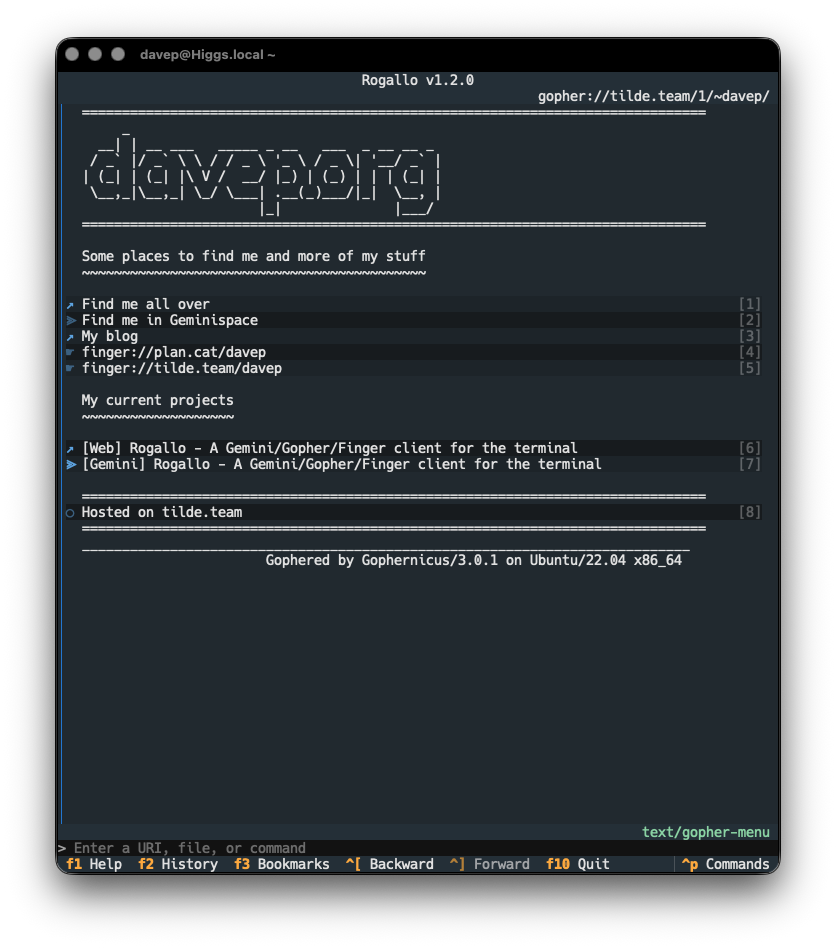
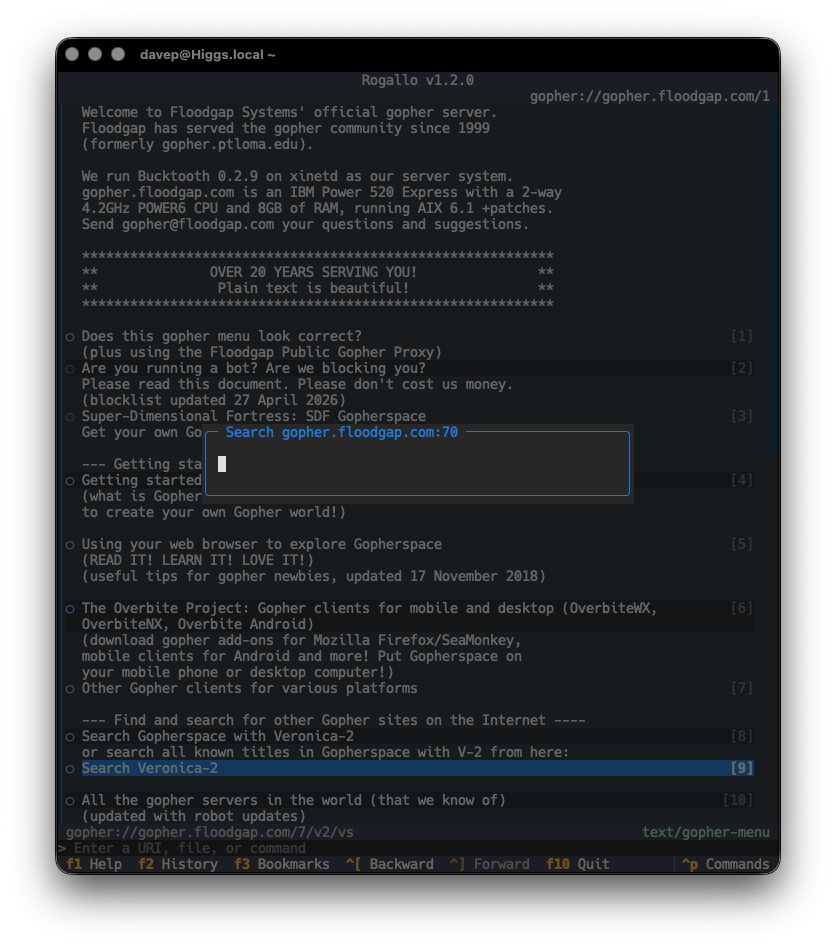
I've updated Rogallo to v1.4.0. The main change in this release is to how server certificates are handled, which in turn should solve a bit of friction Rogallo had when using some popular Gemini capsules.
Until now, Rogallo simply used a TOFU approach for all capsules it encountered. In part, this was because that's all I'd really read about until that point, and also in part because, as Rogallo became more capable and I started to use it as my daily-driver, it just worked. Then, within the space of about a week, I had two popular capsules apparently change their fingerprint. I wasn't expecting that so soon (hence one issue about dealing with this still needing to be worked on).
With this in mind, I made a note about this, and carried on. When someone else also noticed the fingerprint change for AstroBotany, this made me want to try and actually sort this out. And so here's v1.4.0, which I think will (if I've understood things correctly) address the problem and make the journey a lot smoother.
From this version, Rogallo uses a kind of "hybrid" approach to validating the certificate of a capsule. Simply put, here's how it goes:
- Can we check with a certificate authority? If so, perform that check and raise an error if there's a problem.
- If, on the other hand, the certificate is self-signed, use the TOFU route.
To help keep an eye on this approach, and because it's just generally handy to know, I've added a small new element to the UI of Rogallo: a verification badge. This can be seen up in the top-left corner of the viewer. It has three states:
- It will show
⛉if we're visiting a capsule that was validated using a CA - It will show
✓if we're visiting a capsule that was validated using TOFU - It will show no icon if we're visiting a location where this isn't applicable
This is alongside the already-existing ⚿ icon that is shown if we're making use of a client certificate.
While I've not documented them yet (I need to do a round of website updates), each of these icons can be changed if you prefer something different. Just take a look in the configuration.json file for Rogallo.
    "client_certificate_used_icon": "\u26bf",
    "verified_ca_icon": "\u26c9",
    "verified_tofu_icon": "\u2713",
    "verified_off_icon": "\u2717",
    "verified_none_icon": " ",
Note that under normal circumstances the off icon there should never be needed or seen. That's just more for testing.
All of this ends up looking something like this:

To help test and keep an eye on this, I've also added a new command to Rogallo: AboutThisPage, bound to F7 by default. With it you can check on some information about the current page, and also the certificate that was checked when acquiring it.


Note that if a page is loaded from cache you won't see certificate information in this dialog, as that isn't (currently) recorded in the metadata in the cache. I might do that at some point in the future, but it didn't seem necessary for now.