A ChromeOS issue

Posted on 2015-06-21 20:05 +0100 in Tech • Tagged with ChromeOS, ChromeBook, Samsung • 2 min read

Since the last update I've being having a rather odd issue on my old Chromebook. This is my Samsung Series 5, the "original" commercial Chromebook to be released (in the UK anyway). I first noticed it in TweetDeck but have since noticed that it's affecting any browser tab. Simply put, sections of the display either "lag" in their content or they simply show up empty.

First I tried to get a screenshot of what was going on but it didn't work. I did get to show that there was a problem, but what was grabbed by the screenshot wasn't what I saw seeing on the screen. Here's the screenshot:
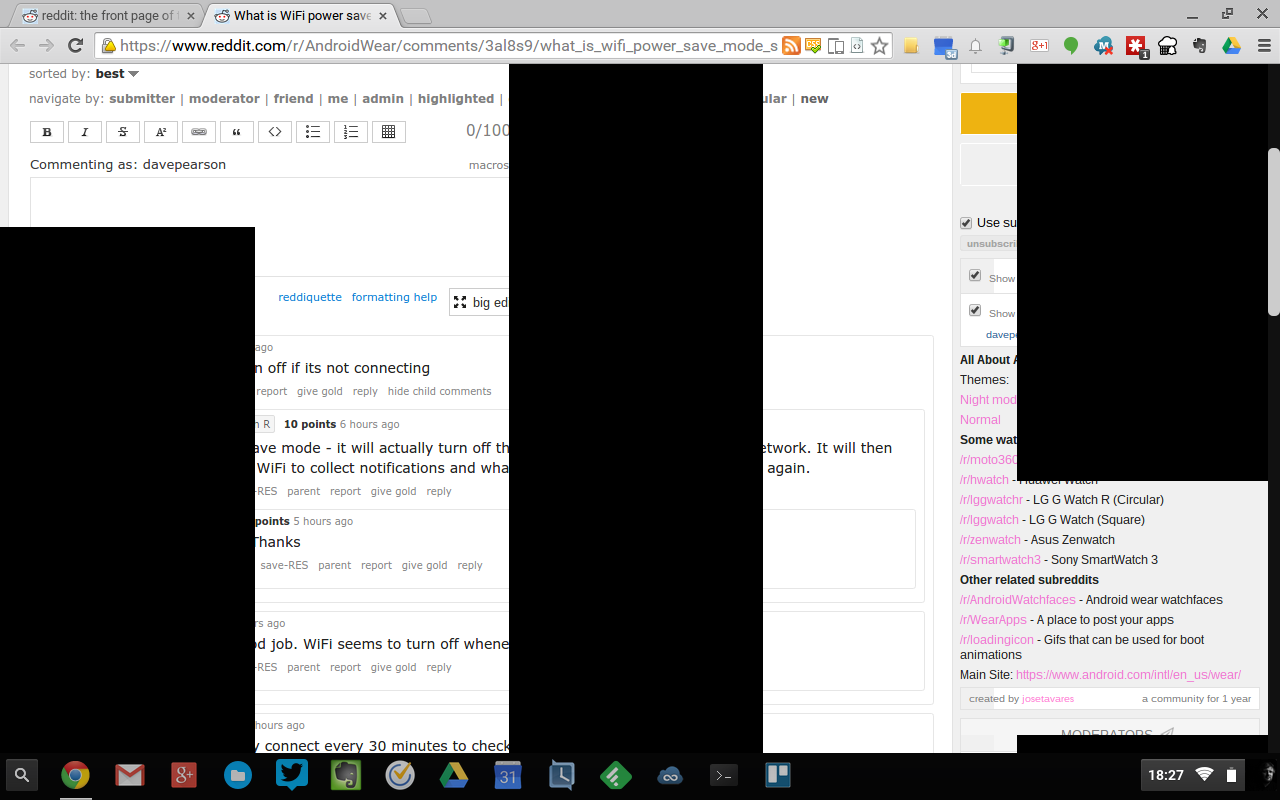
Screenshot of new ChromeOS issue

The only way I can show how it looked to me on the screen is with a (rather horrible I'm afraid) photo:
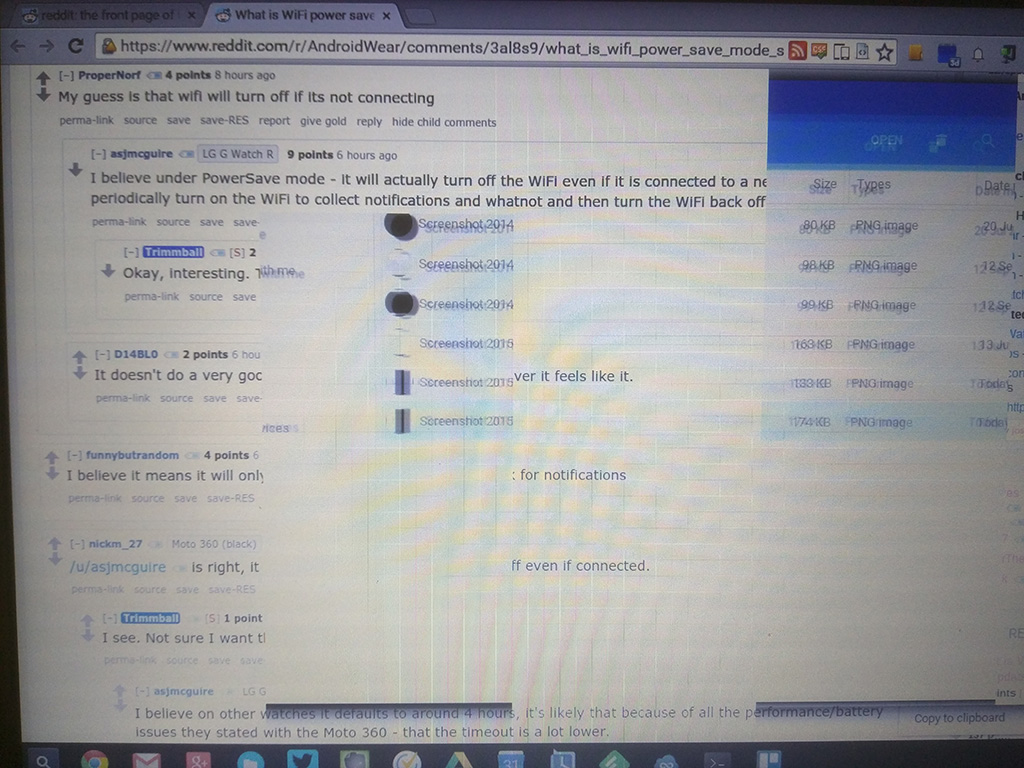
Photo of what the screen actually looked like

It's unclear to me if this is something wrong with the Chromebook itself, or in this release of the OS. It is running the beta channel -- currently on 44.0.2403.54 -- so, of course, this sort of thing is to be expected.

If it is the case that that Chromebook is on its way out -- either in terms of that actual machine dying or support for it at the OS level going away -- it won't be a terrible loss. It's been a great machine and has served me well and wasn't terribly expensive to begin with (the lack of expense is one of the things I really like about Chromebooks, which is why the Pixel continues to perplex me), replacing it with one of the newer crop of Chromebooks won't break the bank.

But I'd be a little sad to see it go, I've done some pretty significant things on it and it is, in some ways, a little bit of computer history.


Edit to add: I've now moved it back over to the stable channel, with a powerwash on the way (of course) and this seems to have done the trick. I'm no longer seeing any problems. The switch to stable even had the problem showing. Here's a video of stable downloading:

That's pretty much the sort of thing I was seeing all over the place, and it appeared to be getting worse as time went on.

Hopefully this was a one-off and the problem isn't simply up in the beta cannel and waiting to head down to stable.
Moto360 updated

Posted on 2015-06-20 14:14 +0100 in Tech • Tagged with Android Wear, Moto360, Android • 2 min read

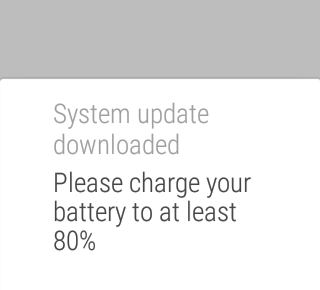
Yesterday evening I finally got the following notification on my Moto360:

Moto360 Update Notification

Given the charge was quite a way below that I took the watch off and put it on charge and then did the update later.

From what I could tell it all went pretty smooth. After updating it even offered me a little tutorial on some of the new things it's added. So far I've used (or set up) the following:

  • The much better "launcher" Finding and running apps on the watch was always a bit of a pain, so much so that others had even written special launchers for Android Wear. This seems to be pretty much solved now. Pressing and holding the watch's side button will pop up application list, from here you can swipe right to your contacts (them letting you send messages, start calls, etc) and right again for the usual list of actions that you used to go straight into.

The way it's done now makes a lot more sense and seems far cleaner.

  • WiFi I've yet to notice the benefit of this, but I've not paid too much attention yet either. The watch now does WiFi. This is supposed to mean that it can still work with my phone when it's out of Bluetooth range. I say I don't know if it's working yet because I use an app to tell me if my phone is out of range and it still keeps tripping as normal -- but I'm unsure if that means it's simply telling me it's out of BT range but really the watch is now doing its thing over WiFi, or perhaps the phone connection really has been lost despite me having set up the WiFi connection. More testing needs to happen here.

Setting this up was curious: I had to turn it on on the watch and then select the access points I wanted to work with, again on the watch. But to actually connect I had to switch back to my phone to enter the AP passwords (which makes perfect sense of course, nobody wants to type passwords into a watch face).

  • Gestures These needed to be turned on in settings. I've being using them this morning to navigate cards on the watch and it's really well done and really natural. Simply put, you flick your wrist up, or down, to "flick" from one card to another. All it seems to be missing is some method of gesturing that I want to swipe a card out of the way.

Other than the above it's pretty much business as usual. Hopefully there's been some work to improve battery life and all that sort of stuff, and only time will tell if a difference has been made there.


ChromeOS ssh has gone! (sort of)

Posted on 2015-06-19 09:10 +0100 in Tech • Tagged with chrome, chromeos, chromebook, ssh • 1 min read

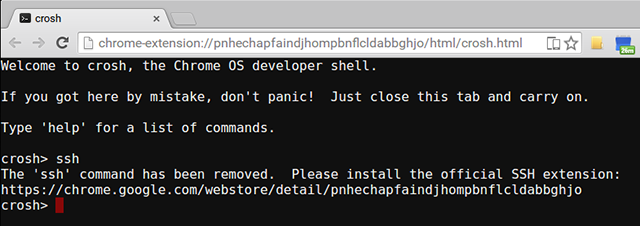
I've no idea when this happened, and I'll admit that the advice it gives is advice I've mostly being following anyway for quite a long time, but it seems that ssh in the ChromeOS terminal has been removed. This is what just happened when I tried to use it just now:

ChromeOS ssh no longer working

To be fair, Chrome Secure Shell is pretty damn good and has served me well for the past couple or so years, working well on the Chromebook and on Windows 7 and 8 (and also now on the Mac, although I'm tending to use ssh in its native terminal more).

I wonder if any other of the limited features of the ChromeOS terminal (in non-dev mode anyway) are going to go the same way?


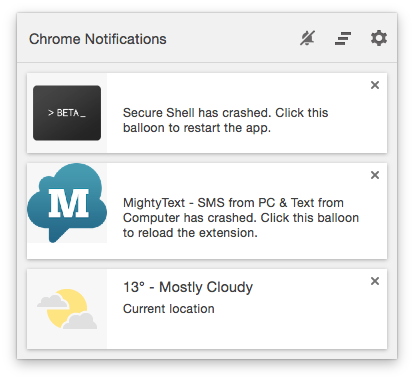
As an aside to the above, something kind of ironic happened as I was writing this. I opened Chrome so I could preview the post as I was writing it and I suffered one of Chrome's rather common extension crashes. Look what one of those extensions was (and I wasn't even using it at the time):

Chrome ssh extension crashes for no reason

Not exactly the best advert for the non-optional replacement.


A mild Chrome annoyance

Posted on 2015-06-18 16:49 +0100 in Tech • Tagged with Google, Chrome, Mac, Windows • 2 min read

For a long time now Chrome has been my web browser of choice. It has, to some degree, become my "other emacs" (ignoring for a moment that my use of GNU emacs has sort of lapsed the last few years). By that I mean that it's a portable environment that serves me well on many operating systems and, for one of my machines, actually is the operating system. I really appreciate how Chrome's sync lets me feel right at home no matter which machine I'm on.

But I've run into one small issue that's kind of annoying.

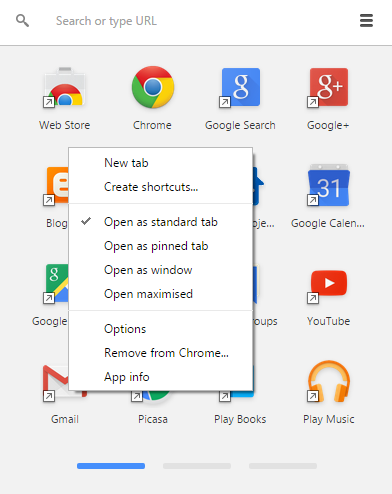
In some situations I find it pleasing, and I find it makes sense, that some web "apps" open in a window of their own rather than in a Chrome tab. On Windows and on ChromeOS this is simple enough, all I need to do is find the "app" in the Chrome app launcher, pull up the content menu, and tell it to open as a window.

Chrome app context menu on Windows 7

Nice and simple1.

Now, the Mac, so well known for doing everything every other OS does but doing it better and being easier to use.... you'd expect it's at least the same there, right?

Nope.

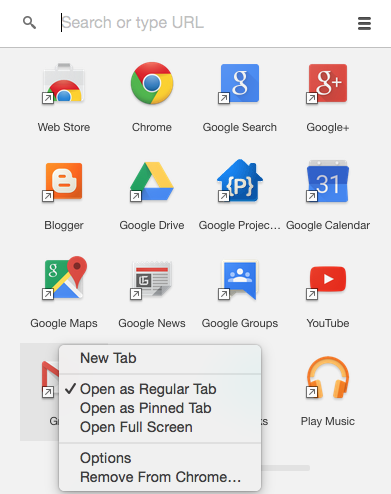
Chrome app context menu on OS X

There's no option at all to open as a window!

So, on the Mac, while I'd love to be able to open Gmail as a window/app in its own right, I'm totally out of luck, it seems. I've no idea whose "fault" this is. It's not clear to me if this is a Chrome/Google decision or if it's about how things have to work on a Mac. Thing is, I find it hard to believe that it's the latter given that Google Keep runs in its own window on the Mac and I can happily pin it to the dock.


  1. It's that simple on ChromeOS too. In case you're wondering why I didn't also illustrate that, it's because you can't take a screenshot on ChromeOS while you've got a context menu open. O_o 


Hello, World!

Posted on 2015-06-18 14:53 +0100 in Meta • Tagged with blogging, Mac • 2 min read

Hello, world.

So I've decided that it's time I had a blog again. An actual blog. Not a set of posts on Google+ or a torrent of 140-character thoughts on twitter but an actual blog.

Part of the reason for this is that there's a couple of personal coding projects I want to have a go at over the next few months and writing about them as I work on them might be fun. Another reason is that I've being wanting to explore the business of hosting a blog on GitHub pages for quite some time and now's the perfect time to do it.

So how am I doing this? Well, for starters, I recently acquired an iMac. The reasons for how and why I chose to do this are varied and mostly uninteresting but what it does mean is that, for the first time in quite a long time, I have a Unix desktop machine again. This fact alone means it's nice and easy for me to play with the likes of Git (or, at the moment more GitHub for Mac than the command line git), ruby, Jekyll and SublimeText (along with a rather nifty package for quickly kicking off a blog post). So that's how I'm doing it. Writing it all locally and pushing it up to GitHub and hosting it with GitHub Pages.

As this goes on I imagine much will change. I've started out with a basic setup, created by simply using:

davep@Ariel:~/blogging$ jekyll new davep.github.com

From now on I'll be playing with styles and my own layouts to see what I can come up with and what I like (although, I most say, for the most part I'm actually liking the clean look it delivers out of the box).

One thing that's obviously missing right now is a facility for commenting. That's something I'll look into should I feel it's necessary -- from what I've seen elsewhere it's easy enough to make use of something like disqus. Update: This has now happened.

One other thing I might look at doing is putting this behind my own domain. For the moment it's only available via github.io and I guess it might look nicer if it was actually available via a URL that looks like the name I've attached to the blog. Update: This has now happened.

Anyway, that's it for now. Time to push this up and think some more about where it'll go from here.