Posts tagged with "Blogging"

Even more BlogMore

3 min read

While the additions have, for sure, slowed down, I'm still tinkering away with BlogMore. Recent changes stem from the fact that someone else has been mad enough to want to experiment with rebuilding their blog with it too, which, if I'm honest, is massively helpful with the ongoing GitHub Copilot experiment. Somehow it feels a little different, ganging up with the agent to implement changes for someone else's benefit.

Recent changes include:

  • Tweaking the size and layout of the "social" icons that appear in the sidebar (this one was for my benefit)
  • Making it possible to customise the title for the socials section in the sidebar (also for my benefit)
  • Providing control over the path used for posts -- this one was a request that made a ton of sense, it's at this point it stops being a tool for me and starts being a more general tool

Next up is the first breaking change where I'm going to remove a feature. This came from my very initial experiment last month, where I was concentrating purely on building a tool for my blog and my blog alone. I'd made it such that the /attachments directory in the content directory had special status, and it would be copied over to the output directory in full. Oddly, however, this never made it into the documentation.

Meanwhile, the /extras directory also had special status with its content, full hierarchy included, being copied over but moved up one level in the output. So, for example, extras/humans.txt became /humans.txt in the resulting site, etc.

Presumably, at this point, you can see where this is going. Why the heck did I have a special attachments folder being copied over, when a folder of any name could live below extras and also get copied over?

So, now, my blog, which uses /attachments for all inline images and covers, has been updated so that the attachments live under extras and it all works as it did before; no special messing with a special folder name.

Given all this, the next release of BlogMore will remove treating /attachments as a special case, making it less hard-coded for my habits and more of a general tool that could be useful for others.


Mildly related to this: I did a lunchtime talk at work today, having turned Five days with Copilot into a 20-25 minute presentation. It was fun to do. I've not written or given a talk or presentation in a long time -- probably the last time was when I helped run Newton's Astronomical Society in the early 2000s -- so the preparation for this was a little daunting to start with.

While doing this, not wanting to break a long streak of never having used PowerPoint, I discovered and gave sli.dev a go. Writing a single Markdown file to power the talk was exactly my kind of approach. I don't have any experience with any other such tools, but if you're ever looking for something like this I recommend giving it a try.

I'm also open to suggestions of other options, given I might end up doing this some more.

Seen by davep revived

2 min read

A different glen

Following on from the rescue of my photoblog, followed by the rescue of the original incarnation, I've been thinking that I should get into the habit of posting the odd image here and there again, when the desire takes me.

The problem is the workflow. The point and purpose of the last two incarnations was that I just had to take image, manipulate image, post image and then lots of other things would happen. As I've mentioned in the posts linked to here, and others here on this blog, it's much harder these days to achieve that seamless and frictionless workflow we used to enjoy during the rise and the peak of "Web 2.0".

So yesterday I decided on an approach that, while it's neither seamless nor frictionless (yet), it feels like it will work. So here's the plan:

  • Take photo
  • Manipulate photo1
  • In Apple Photos add a description to the image
  • Export JPEG file to a Photoblog Inbox folder in iCloud Drive
  • Later, when I'm at my desk, import the image into the photoblog
  • Publish the updated blog

So, yeah, more manual steps are required, at least for the moment. I suspect though that if this works well I might be able to increase the automation involved and do it in such a way that I'm in control of the steps and services (or at least I'll be able to do it in a way that I can swap out a step should whatever service being be lost).

As an aside, for anyone who might have been following along with my experiments with GitHub Copilot: the import tool I link to above was written from a prompt. This, for me, feels like the ideal use for such a tool. Writing that script was going to be a chore, I wanted to get on with the bigger picture thing, so asking Copilot to write it while I attended to other things felt sensible and useful.

I'll likely tidy up the code soon, but for now what was produced works and it let me try all of this out in the time I had available on an otherwise busy Sunday afternoon.


  1. Still using Snapseed. Snapseed is always fun for evoking the mood. 

More BlogMore

3 min read

I've just released v1.7.0 of BlogMore, my ongoing experiment with GitHub Copilot. Since the last release I wrote about I've made a couple of cosmetic changes, and also addressed a couple of bugs.

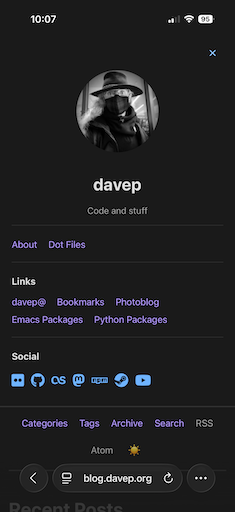
The first cosmetic change relates to how the blog appears on mobile devices1. In such a circumstance, before the change, the sidebar content would, by design, relocate to the top of the page. This made sense, it meant that the information was still available, but it also had the unfortunate effect of pushing the actual post content way down the screen, sometimes off the bottom of the screen.

The expanded view

Not great.

So I decided to try and improve the mobile layout. As I have done so many times now, I started out with an issue that served as a prompt and assigned it to Copilot; despite the fairly vague request and the fact that I gave it an image to consider, and essentially gave it a hand-waved ASCII diagram of what I wanted, it mostly managed to one-shot the problem.

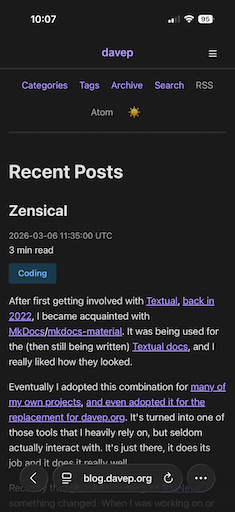
Now, when I visit the site on my phone, I see a lot less "admin" stuff at the start.

The collapsed view

As a reader I can still toggle the "sidebar" information into view and out of the way again, but the important thing is I can get into the post itself right away.

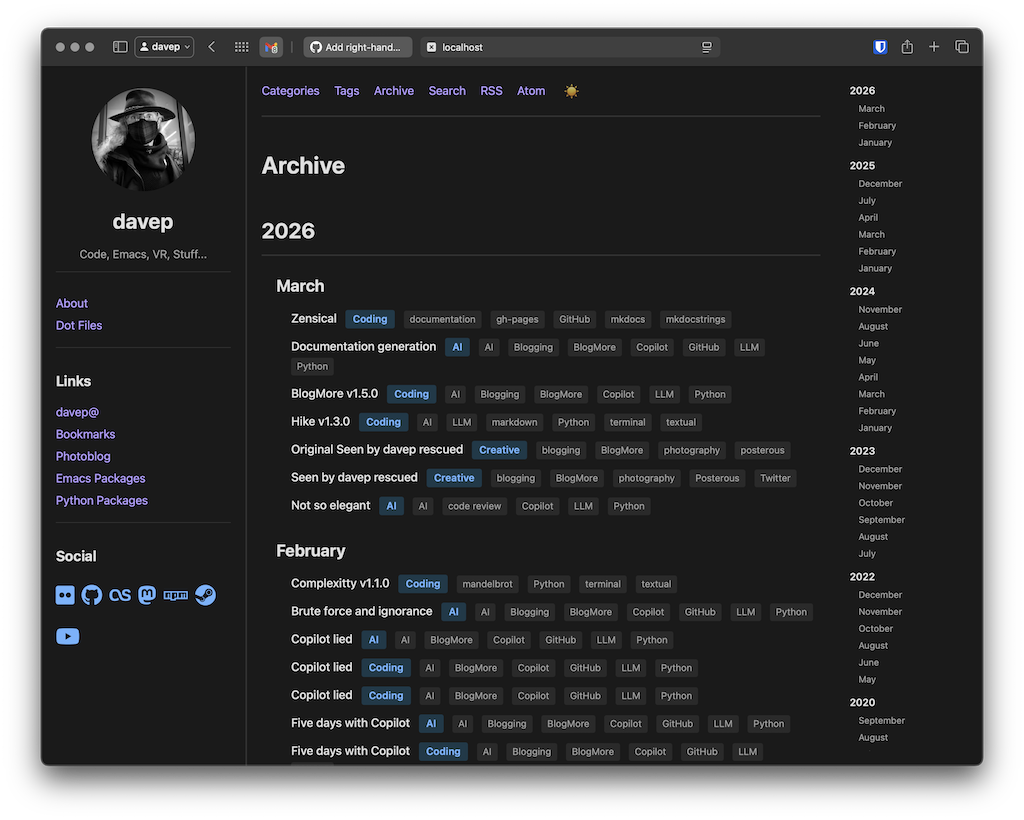
Another change that's mostly cosmetic, although has a purpose too, is an index in the archive page. I've created this to only be available on wider displays; a tool to make use of any "dead" space on the right hand side of the page. This gives a table of contents of years and months so the reader can skip around the archives faster.

The archive table of contents

There have been some under-the-hood changes too. One was an effort to reduce the repeated boilerplate that I noticed was creeping into the templates. While I'm mainly building this tool for myself and the "out of the box" design is how I want my blog to look, I do want the templates to be usable and as efficient and as easy to modify as possible.

As mentioned earlier, there's also been a couple of bug fixes; one example being tackling some misbehaviour on GNU/Linux when it comes to site generation. That issue was an interesting one in that I wasn't able to reproduce the problem, so I decided to let Copilot have at it and make its best deduction. From what I can tell it came through (I still need confirmation that it has solved the problem; but it does seem to have identified an actual edge-case that was worth taking care of).

At this point I'd also like to give a shout out to @andyc. He's been a great source of testing and feedback as I've been toying with this experiment. While I set out to build a useful tool for me and me alone, he's raised a few good issues that should push it in the direction of being of more general use.

I highly recommend having a read of his post reviewing a good number of static site generators. As I keep tinkering with BlogMore I'll be keeping this post in mind.


  1. Okay fine any narrow viewport but you know what I mean! 

Documentation generation

2 min read
AI

While I've written a lot of documentation in my life, it's not something I enjoy. I want documentation to read well, I want documentation to be useful, I want documentation to be accurate. I also want there to be documentation at all and sometimes the other parts mean it doesn't get done for FOSS projects1.

When I started the experiment that is BlogMore, I very quickly hashed out some ideas on how it might generate some documentation, and the result was okay. In fact, if anything, it was a bit too much and there was a lot of repeated information.

So, this morning, before I sat down for the day's work, I quickly wrote an issue that would act as a prompt to Copilot to rewrite the documentation. This time I tried to be very clear about what I wanted where, but also left it to work out all the details.

The result genuinely impressed me. While I'll admit I haven't read it all in detail (and because of this have left the same warning right at the start), on the surface it looks a lot clearer and feels like a better journey to learning how to use BlogMore.

blogmore.davep.dev hosts the result of this.

I have a plan to work through the documentation and be sure it's all correct and all makes sense, but if it's as correct and as useful as I think, I might have to consider the idea of taking this approach more often. Writing down the plan for the documentation and then letting it appear in the background while I get on with my actual day makes a lot of sense.

I fear I might be warming to these tools, a little bit. :-/


  1. Although I've made a point of doing it for almost every one of my recent Textual-based projects. 

BlogMore v1.5.0

3 min read

Since switching over on the 19th of last month I've been making lots of changes to BlogMore. While there's been a good few bug fixes and QoL changes, I've also been adding new features that I've found myself wanting.

Here's a list of some of the significant additions I've added in the last couple of weeks (and, yes, as per the experiment, all of these have been developed by me prompting GitHub Copilot):

  • All parts of a date in a post's timestamp can be clicked to get to an archive of that point in time.
  • Added fully-client-side full text search (I'm finding this especially useful).
  • Added sitemap generation.
  • Added a general fallback description for any page that doesn't have one.
  • Added fallback keywords for any page that doesn't have any.
  • Added author metadata to the header of all pages.
  • Hugely optimised the use of FontAwesome.
  • Made best possible use of all the usual og: type metadata in the head of all pages.
  • Added optional CSS minification, improving page load times.
  • Added optional JavaScript minification, improving page load times.
  • Where appropriate, all pages now have rel="prev" and rel="next" tags in the <head>.
  • Added a rel="canonical" tag to the <head> of all pages.
  • Improved the style and workings of the pagination of all archive type pages.
  • Improved the cosmetics of the category and tag clouds.
  • Improved how the first paragraph is discovered for a page or post, when using it as the default description in the <head> of a page.
  • Cleaned up the generated HTML so it's more compact.
  • Added support for custom 404 pages.

As I say, they're just the improvements I've made that have come to mind as I've used BlogMore. I've also done a lot of bug fixing too. You can read the full changelog over on the BlogMore website1.

I feel that the pace of updates and additions has started to slow; I think I've now got more or less everything I wanted from this. I'm pretty sure I can do everything I ever bothered to do with Jekyll and Pelican, and I am enjoying "owning" the code such that, if I have an idea for something I want, it's easy enough to make it happen.

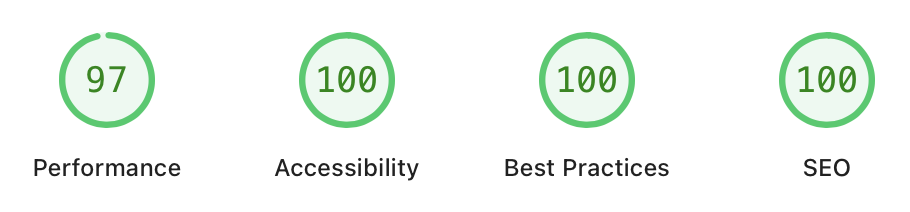
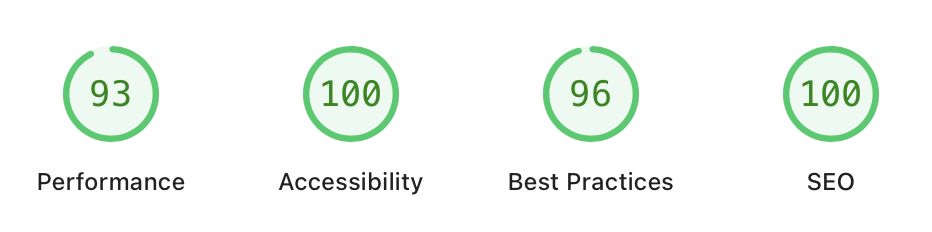
I'm also pretty happy with how well the results perform. Despite the fact I'm not a web developer, and despite this blog being served by GitHub Pages (which, let's be honest, isn't the most speedy host), the measurements for a single page in the blog look fairly good:

Desktop

That's measuring loading in a desktop context. Even measured as mobile (which I've tried to make work well too) it's not too shabby:

Mobile

I think I can rightfully be satisfied with those values, given this isn't normally my primary focus when it comes to software development.

Anyway, if you like messing with static site generators, and one that is blog-centric sounds useful, and if you're not put off by the fact that this is a deliberate "use GitHub Copilot" experiment, feel free to take a look.


  1. Which, somewhat amusingly, is built with MkDocs. 

Original Seen by davep rescued

1 min read

Still Alive

At the end of yesterday's post I said I might see if I can rescue the original photoblog from its backup on WordPress. This was the first photoblog I played with, posting to the long-dead Posterous between 2009 and 2013.

So, yesterday evening, I did an extract of the full feed from WordPress, and also asked for a full backup of all the media. I then fired up Emacs and rattled out some Python code that would marry up the two sets of data and add to the photoblog repository. It took a little bit of working out; it seems that every post had two entries in the feed: a parent and a child entry. I've no clue why that's the case; I didn't really care to get too deeply into it.

Soon enough seen-by.davep.dev was updated with an extra 1,833 posts! So now the categories on that blog site are broken down into Seen By Me 1 (the original) and Seen By Me 2 (the second incarnation).

Sadly, for the first blog, tagging wasn't really much of a thing so the tag cloud hasn't grown too much.

But, finally, I've got both the photoblogs back up and hosted somewhere I can point to, and I'm fully in control of their content. While it is hosted on GitHub Pages I've done this in a way that it would be pretty easy to move elsewhere; this is down to the fact that it's a simple static site built with BlogMore.

Seen by davep rescued

2 min read

Final Message

Since mid-2023 my photoblog has been broken. As I mentioned at the time, the issue was that this second incarnation of the blog had started life as a proper mashup of some web tools, and the heart of it was Twitter.

It all started to fall apart when Twitter got its new owner, and APIs became expensive, and other tools would not or could not work with it any more, and then it really fell apart when I finally nuked my account.

So since then the blog has been sat about, unused and unloved, with a lot of broken links and images.

Thankfully, though, the pipeline that I had going had been designed with this sort of problem in mind: part of what I had going also made a backup of the photos I took to Google Drive and to Google Photos. So when I got to a point the other day where BlogMore was usable I decided I should rescue the photos and rebuild the blog.

After downloading the full feed of the Blogger.com-hosted blog, I threw together some Python code that took the data (thanks to feedparser for helping with that), matched up the posts with the images I had in Google Drive, slugged the names, wrote some Markdown and copied some images, and I had the source of a fresh blog.

The result of all of this can be seen up on seen-by.davep.dev.

I strongly suspect this is going to remain a pretty static site. At the moment I've given no thought whatsoever as to how I might have this populate in the way the old version of it did. Quite simply the old version was:

  1. Take photo
  2. Post to Twitter with a specific hashtag
  3. Have IFTTT notice this and create the blog post, make backups
  4. ...
  5. Profit?

I suppose, this time around, I could have something monitor my Mastodon account, or my pixelfed account, and then trigger a similar process; but then that would need something akin to IFTTT running and interacting with GitHub and creating the Markdown and kicking off a build process and...

Eh, maybe one day. For now, though, I'll be happy that I've rescued this particular incarnation of my photoblog and then think about if and how I carry on with something similar in the future.

Meanwhile... this has got me thinking. The original blog is backed up on WordPress. It's been sat there, all sad and neglected, ever since Posterous disappeared. I wonder if I can export all the data from there and mash it into this new version...

Brute force and ignorance

5 min read
AI

My experiment with coding with an agent continues, and from the point of view of the usability of the results, I'd say it's going well. From the point of view of learning more about this sort of tool and the pitfalls: I'd also say it's going well.

The one thing I'm really starting to get an appreciation for is just how much it employs a sort of brute force and ignorance approach to getting to a solution for some sort of problem. I noticed this on and off as I watched the agent's chat, as it worked away.

One example I enjoyed was when it was trying to add a new dependency to BlogMore. For reasons I should probably try and understand1 it knew it should be using uv to add a dependency and it knew how to use it to update the lock file, but it didn't have uv to hand:

The lock file (uv.lock) needs to be updated to include rcssmin. Since uv isn't available, I'll need to note this in the PR. The lock file should be generated by uv when the pyproject.toml is updated.

So it decided the best solution was probably to... "hand-edit" the lock file.

The lock file needs to be updated with rcssmin. Since uv is not available in this environment, I need to update it manually or find another way.

I need to update the uv.lock file to include rcssmin. The uv.lock file needs to include:

  1. The rcssmin package entry with hashes
  2. The rcssmin dependency in the blogmore package section

Let me look at the PyPI page for rcssmin 1.2.2 to get the hash.

It then grabs rcssmin from PyPI and checks out the information it wants; after which it goes:

I need to update the uv.lock file with the rcssmin package information. The uv.lock file uses SHA256 hashes. Let me look at the existing format in more detail to understand what I need to add, and then I'll query PyPI for the hashes.

Actually, let me think about this differently. The uv.lock file is a generated file, and updating it manually is error-prone. The proper way to update it is to run uv sync or uv lock. Since uv is not available in this environment, I have two options:

  1. Let the CI update the lock file (risky if CI fails on the locked version)

So... around this point it has some sort of plan for hand-patching the lock file, but also recognises that this is a dodgy approach and it should be using uv to update the lock file.

I also really like the part where it says it has two options, then goes on to provide an exhaustive list of... one.

After this it runs this code:

import json, urllib.request
url = 'https://pypi.org/pypi/rcssmin/json'
try:
    with urllib.request.urlopen(url, timeout=10) as f:
        data = json.load(f)
    v = '1.2.2'
    releases = data['releases'].get(v, [])
    for r in releases:
        print(f'filename: {r[\"filename\"]}')
        print(f'  url: {r[\"url\"]}')
        print(f'  sha256: {r[\"digests\"][\"sha256\"]}')
        print(f'  size: {r[\"size\"]}')
        print(f'  upload_time: {r[\"upload_time_iso_8601\"]}')
except Exception as e:
    print(f'Error: {e}')

after which it concludes:

Now I have all the information I need to update the uv.lock file. I need to add:

  1. The rcssmin package entry in the lock file
  2. Add rcssmin to the blogmore package dependencies

I mean... okay, I guess. Again, I'll admit that I'm still getting used to setting this sort of thing up and working with it (and keep in mind none of this was done locally; this is all via GitHub Copilot, up on GitHub), but it's kind of funny and wild that the approach taken was to recognise that using uv to remake the lock file was the best approach so... let's hand-edit the lock file.

But that's not the best part. This is where it gets really fun. It had decided that the lock file must be in alphabetical order. Okay, sure, why not:

The lock file has packages sorted alphabetically, so rcssmin should go between pygments and python-dateutil (since "r" comes before "py" actually... no, wait - "r" comes after "p" in the alphabet. Let me check the order again).

Since "r" comes before "py."

Since "r" comes before "py."

o_O

O_o

Extra credit here for giving me a good giggle. I really appreciate the way that it catches itself mid-sentence and remembers how the alphabet actually works.

As to the outcome of all of this? Sure, the feature I wanted to add got added; it worked away and got to a working solution in the end. But the route it took was, I think it's fair to say, a "brute force and ignorance" approach.

I've not been spending too much time reading the agent's own chatter, but when I have I've found myself amused by the dead ends it'll wander down and then work its way back out. There is, without question, a recognisable process here: I believe it would be a dishonest developer who says they've never had times in the past, or just one of those off days, where they've fallen down a rabbit hole of a solution, only to realise it's the right solution implemented in the worst possible way. There's also a resemblance here to how more junior developers work a problem until they really develop their skills.

I think I'm going to keep an eye on the agent chat a bit more from now on. While I imagine things will only improve as these tools improve, for the moment it's a good source of coding comedy.


  1. Presumably there's things I can be doing to make its life easier. 

Five days with Copilot

14 min read
AI

Another itch to scratch

As I mentioned yesterday, I've been a happy user of Pelican for a couple or so years now, but every so often there's a little change or tweak I'd like to make that requires diving deeper into the templates and the like and... I go "eh, I'll look at it some time soon". Another thought that often goes through my head at those times is "I should build my own static site generator that works exactly how I want" -- because really any hacker with a blog has to do that at some point.

Meanwhile... I've had free access to GitHub Copilot attached to my GitHub account for some time now, and I've hardly used it. At the same time -- the past few months especially -- I've been watching the rise of agents as coding tools, as well as the rise of advocates for them. Worse still, I've seen people I didn't expect to be advocates for giving up on coding turning to these tools and suddenly writing rationales in favour of them.

So, suddenly, the idea popped into my head: I should write my own static site generator that I'll use for my blog, and I should try and use GitHub Copilot to write 100% of the code, and documentation, and see how far I get. In doing so I might firm up my opinions about where we're all going with this.

The requirements were going to be pretty straightforward:

  • It should be a static site generator that turns Markdown files into a website.
  • It should be blog-first in its design.
  • It should support non-blog-post pages too.
  • It should be written in Python.
  • It should use Jinja2 for templates.
  • It should have a better archive system than I ever got out of my Pelican setup.
  • It should have categories, tags, and all the usual metadata stuff you'd expect from a site where you're going to share content from.

Of course, the requirements would drift and expand as I went along and I had some new ideas.

Getting started

To kick things off, I created my repo, and then opened Copilot and typed out a prompt to get things going. Here's what I typed:

Build a blog-oriented static site generation engine. It should be built in Python, the structure of the repository should match that of my preferences for Python projects these days (see https://github.com/davep/oldnews and take clues from the makefile; I like uv and ruff and Mypy, etc).

Important features:

  • Everything is written in markdown
  • All metadata for a post should come from frontmatter
  • It should use Jinja2 for the output templates

As you can see, rather than get very explicit about every single detail, I wanted to start out with a vague description of what I was aiming for. I did want to encourage it to try and build a Python repository how I normally would, so I pointed it at OldNews in the hope that it might go and comprehend how I go about things; I also doubled-down in the importance of using uv and mypy.

The result of this was... actually impressive. As you'll see in that PR, to get to a point where it could be merged, there was some back-and-forth with Copilot to add things I hadn't thought of initially, and to get it to iron out some problems, but for the most part it delivered what I was after. Without question it delivered it faster than I would have.

Some early issues where I had to point out problems to Copilot included:

  • The order of posts on the home page wasn't obvious to me, and absolutely wasn't reverse chronological order.
  • Footnotes were showing up kinda odd.
  • The main index for the blog was showing just posts titles, not the full text of the article as you'd normally expect from a blog.

Nothing terrible, and it did get a lot of the heavy lifting done and done well, but it was worth noting that a lot of dev-testing/QA needed to be done to be confident about its work, and doing this picked up on little details that are important.

An improvement to the Markdown

As an aside: during this first PR, I quickly noticed a problem where I was getting this error when generating the site from the Markdown:

Error generating site: mapping values are not allowed in this context
  in "<unicode string>", line 3, column 15

I just assumed it was some bug in the generated code and left Copilot to work it out. Instead it came back and educated me on something: I actually had bad YAML in the frontmatter of some of my posts!

This, by the way, wouldn't be the last time that Copilot found an issue with my input Markdown and so, having used it, improved my blog.

A major feature from a simple request

Another problem I ran into quickly was that previewing the generated site wasn't working well at all; all I could do was browse the files in the filesystem. So, almost as an offhand comment, in the initial PR, I asked:

Can we get a serve mode please so I can locally test the site?

Just like that, it went off and wrote a whole server for the project. While the server did need a lot of extra work to really work well1, the initial version was good enough to get me going and to iterate on the project as a whole.

The main workflow

Having kicked off the project and having had some success with getting Copilot to deliver what I was asking for, I settled into a new but also familiar workflow. Whereas normally, when working on a personal project, I'll write an issue for myself, at some point pick it up and create a PR, review and test the PR myself then merge, now the workflow turned into:

  • Write an issue but do so in a way that when I assign it to Copilot it has enough information to go off and do the work.
  • Wait for Copilot to get done.
  • Review the PR, making change requests etc.
  • Make any fixes that are easier for me to fix by hand that describe to Copilot.
  • Merge.

In fact, the first step had some sub-steps to it too, I was finding. What I was doing, more than ever, was writing issues like I'd write sticky notes: with simple descriptions of a bug or a new feature. I'd then come back to them later and flesh them out into something that would act as a prompt for Copilot. I found myself doing this so often I ended up adding a "Needs prompt" label to my usual set of issue labels.

All of this made for an efficient workflow, and one where I could often get on with something else as Copilot worked on the latest job (I wasn't just working on other things on my computer; sometimes I'd be going off and doing things around the house while this happened), but... it wasn't fun. It was the opposite of what I've always enjoyed when it comes to building software. I got to dream up the ideas, I got to do the testing, I got to review the quality of the work, but I didn't get to actually lose myself in the flow state of coding.

One thing I've really come to understand during those 5 days of working on BlogMore was I really missed getting lost in the flow state. Perhaps it's the issue to PR to review to merge cycle I used that amplified this, perhaps those who converse with an agent in their IDE or in some client application keep a sense of that (I might have to try that approach out), but this feels like a serious loss to me when it comes to writing code for personal enjoyment.

The main problems

I think it's fair to say that I've been surprised at just how well Copilot understood my (sometimes deliberately vague) requests, at how it generally managed to take some simple plain English and turn it into actual code that actually did what I wanted and, mostly, actually worked.

But my experiences over the past few days haven't been without their problems.

The confidently wrong problem

Hopefully we all recognise that, with time and experience, we learn where the mistakes are likely to turn up. Once you've written enough code you've also written plenty of bugs and been caught out by plenty of edge-cases that you get a spidey-sense for trouble as you write code. I feel that this kind of approach can be called cautiously confident.

Working with Copilot2, however, I often ran into the confidently wrong issue. On occasion I found it would proudly3 request review for some minor bit of work, proclaiming that it had done the thing or solved the problem, and I'd test it and nothing had materially changed. On a couple of occasions, when I pushed back, I found it actually doubting my review before finally digging in harder and eventually solving the issue.

I found that this took time and was rather tiring.

There were also times where it would do the same but not directly in respect to code. One example I can think of is when it was confident that Python 3.14 was still a pre-release Python as of February 2026 (it isn't).

This problem alone concerns me; this is the sort of thing where people without a good sense for when the agent is probably bullshitting will get into serious trouble.

The tries-too-hard problem

A variation on the above problem works the other way: on at least one occasion I found that Copilot tried too hard to fix a problem that wasn't really its to fix.

In this case I was asking it to tidy up some validation issues in the RSS feed data. One of the main problems was root-relative URLs being in the content of the feed; for that they needed to be made absolute URLs. Copilot did an excellent job of fixing the problem, but one (and from what I could see only one) relative URL remained.

I asked it to take a look and it took a real age to work over the issue. To its credit, it dug hard and it dug deep and it got to the bottom of the problem. The issue here though was it tried too hard because, having found the cause of the problem (a typo in my original Markdown, which had always existed) it went right ahead and built a workaround for this one specific broken link.

Now, while I'm a fan of Postel's law, this is taking things a bit too far. If this was a real person I'd tasked with the job I would have expected and encouraged them to come back to me with their finding and say "dude, the problem is in your input data" and I'd have fixed my original Markdown.

Here though it just went right ahead and added this one weird edge case as something to handle.

I think this is something to be concerned about and to keep an eye on too. I feel there's a danger in having the agent rabbit-hole a fix for a problem that it should simply have reported back to me for further discussion.

The never-pushes-back problem

Something I did find unsurprising but disconcerting was Copilot's unwillingness to push back, or at least defend its choices. Sometimes it would make a decision or a change and I'd simply ask it why it had done it that way, why it had made that choice. Rather than reply with its reasoning it would pretty much go "yeah, my bad, let me do it a way you're probably going to find more pleasing".

A simple example of this is one time when I saw some code like this:

@property
def some_property(self) -> SomeValue:
    from blogmore.utils import some_utility_function
    ...

I'm not a fan of imports in the body of methods unless there's a demonstrable performance reason. I asked Copilot why it had made this choice here and its reply was simply to say it had gone ahead and changed the code, moving the import to the top of the module.

I see plenty of people talk about how working with an agent is like pair-programming, but I think it misses out on what's got to be the biggest positive of that approach: the debate and exchange of ideas. This again feels like a concern to be mindful of, especially if someone less experienced is bringing code to you where they've used an agent as their pair buddy.

The overall impression

Now I'm at the end of the process, and using the result of this experiment to write this post4, I feel better informed about what these tools offer, and the pitfalls I need to be mindful of. Sometimes it wasn't a terrible way of working. For example, on the first day I started with this, at one point on a chilly but sunny Sunday afternoon, I was sat on the sofa, MacBook on lap, guiding an AI to write code, while petting the cat, watching the birds in the garden enjoy the content of the feeder, all while chatting with my partner.

That's not a terrible way to write code.

On the other hand, as I said earlier, I missed the flow state. I love getting lost in code for a few hours and this is not that. I also found the constant loop of prompt, wait, review, test, repeat, really quite exhausting.

As best as I can describe it: it feels like the fast food of software development. It gets the job done, it gets it done fast, but it's really not fulfilling.

At the end of the process I have a really useful tool, 100% "built with AI", under my guidance, which lets me actually be creative and build things I do create by hand. That's not a bad thing, I can see why this is appealing to people. On the other hand the process of building that tool was pretty boring and, for want of a better word... soulless.

Conclusion

As I write this I have about 24 hours of access to GitHub Copilot Pro left. It seems this experiment used up my preview time and triggered a "looks like you're having fun, now you need to decide if you want to buy it" response. That's fair.

So now I'm left trying to decide if I want to pay to keep it going. At the level I've been using it at for building BlogMore it looks like it costs $10/mth. That actually isn't terrible. I spend more than that on other hobbies and other forms of entertainment. So, if I can work within the bounds of that tier, it's affordable and probably worth it.

What I'm not sure about yet is if I want to. It's been educational, I can 100% see how and where I'd use this for work (and would of course expect an employer to foot the bill for it or a similar tool), and I can also see how and where I might use it to quickly build a personal-use tool to enable something more human-creative.

Ultimately though I think I'm a little better informed thanks to this process, and better aware of some of the wins people claim, and also better informed so that I can be rightly incredulous when faced with some of the wilder claims.

Also, it'll help put some of my reading into perspective.


  1. Amusingly I uncovered another bug while writing this post. 

  2. I keep saying Copilot, but I think it's probably more correct to say "Claude Sonnet 4.5" as that's what seemed to be at play under the hood, if I'm understanding things correctly. 

  3. Yes, of course that's an anthropomorphism, you'll find plenty of them in this article as it's hard not to write about the subject in any other way; it's an easy shortcut to explain some ideas 

  4. Actually I'm writing this post as I always do: in Emacs. But BlogMore is in the background serving a local copy of my blog so I can check it in the browser, and rebuilding it every time I save a change. 

A new engine

2 min read

For about 2 and a half years now this blog has been built with Pelican. For the most part I've enjoyed using it, it's been easy enough to work with, although not exciting to work with (which I think is a positive thing to say about a static site generator).

There were, however, a couple or so things I didn't like about the layout I was getting out of it. One issue was the archive, which was a pretty boring list of titles of all the posts on the site. It would have been nice to have them broken down by date or something, at least.

Of course, there are lots of themes, and it also uses templates, so I could probably have tweaked it "just so"; but every time I started to look into it I found myself wanting to "fix" the issue by building my own engine from scratch.

Thankfully, every time that happened, I'd come to my senses and go off and work on some other fun personal project. Until earlier this week, that was.

The thing is... I've been looking for a project where I could dive into the world of "AI coding" and "Agents" and all that nonsense. Not because I want to abandon the absolute thrill and joy I still get from writing actual code as a human, but because I want to understand things from the point of view of people who champion these tools.

The only way I'm going to have an informed opinion is to get informed; the only way to get informed is to try this stuff out.

So, here I am, with my blog now migrated over to BlogMore; a project that gives me a blog-focused static site generator that I 100% drove the development of, but for which I wrote almost none of the code.

At the moment it's working out well, as a generator. I'm happy with how it works, I'm happy with what it generates. I also think it's 100% backwards-compatible when it comes to URLs and feeds and so on. If you do see anything odd happening, if you do see anything that looks broken, I'd love to hear about it.

As for this being a "100% AI" project, and how I found that process and how I feel about the implications and the results... that's a blog post to come.

I took lots of notes.